Ideology guide
Anarchism
A full guide to anarchism, from the ancient meaning of “without rulers” to socialist, communist, syndicalist, and ecological currents.
Timeline
- 1840
Proudhon publishes What Is Property?
Pierre-Joseph Proudhon identifies as an anarchist and declares that “property is theft,” helping define mutualism as an early socialist anti-state current.
- 1849
Bakunin joins the Dresden uprising
Mikhail Bakunin participates in the Dresden uprising, is imprisoned, and later returns to European revolutionary politics.
- 1864
First International founded
The International Workingmen’s Association forms in London, bringing Marxists, anarchists, mutualists, and other socialist currents into one organization.
- 1868
Bakunin forms the IASD
Bakunin creates the International Alliance of Socialist Democracy and seeks to affiliate it with the First International.
- 1872
Hague Congress split
The First International expels Bakunin and supporters, deepening the divide between Marxist and anarchist socialist strategies.
- 1876
Bakunin dies
Bakunin dies after continuing to advocate anti-state revolutionary socialism.
- 1883
Marx dies
Karl Marx dies, but the debate between Marxist and anarchist methods continues across the socialist movement.
- 1889
Second International formed
European socialist parties found the Second International, where debates over electoral political action continue.
- 1892
Kropotkin publishes The Conquest of Bread
Kropotkin develops anarcho-communist arguments for freely shared wealth and distribution based on need.
- 1896
Anarchists excluded from the Second International
A political-action requirement effectively excludes anarchists who reject participation in state elections.
- 1902
Mutual Aid published
Kropotkin publishes Mutual Aid: A Factor of Evolution, arguing that cooperation is central to survival and evolution.
- 1910
CNT founded in Spain
The Confederación Nacional del Trabajo forms in Barcelona, becoming one of the most influential anarcho-syndicalist unions and a major force in Spanish labor struggle.
- 1912
IWW Lawrence textile strike
The Industrial Workers of the World helps organize the “Bread and Roses” strike, showing how syndicalist tactics could unite immigrant textile workers across language and craft lines.
- 1922
IWA-AIT refounded
Anarcho-syndicalist unions create the International Workers’ Association in Berlin to coordinate revolutionary unionism against capitalism, fascism, and state socialism.
- 1936-39
Spanish Revolution and Civil War
CNT and FAI militants help collectivize workplaces and farms in Republican Spain while fighting Franco’s fascist forces and navigating conflict with state-backed anti-fascist allies.
- 1958
Bookchin publishes Our Synthetic Environment
Murray Bookchin, writing as Lewis Herber, releases an early ecological critique of modern society that helps shape the later development of social ecology.
- 1971
Bookchin publishes Post-Scarcity Anarchism
The collection brings together Bookchin’s arguments that ecological technology, direct democracy, and anti-hierarchical politics can support a liberatory anarchist society.
- 1982
The Ecology of Freedom
Bookchin’s major social ecology work argues that ecological crisis is rooted in social hierarchy and domination, not simply in technology or population.
- 1994
Zapatista uprising
Indigenous rebels in Chiapas launch an anti-neoliberal struggle that inspires many anarchists with its autonomous municipalities, assemblies, and horizontal organizing.
The Origins of the Term “Anarchy”
Unlike the previously discussed terms, Anarcho-Socialism did not arise out of Marxism; it developed alongside it. The word and concept anarchy is about as old as the concept of democracy itself. It comes from a combination of the prefix “an” (which means without) and the word “arkhos” (which meant ruler, or leader), literally meaning, without a ruler. Thinkers well respected in modern philosophical thought, like Plato and Aristotle, used it to describe a supposed flaw in democracy (or what we would call today direct democracy), proposing that a strong, virtuous leader was necessary to lead society and make decisions on its behalf.
In medieval Europe the term was often used to describe civil disorder, and even today many people use the term this way, and many people, like myself before I was 23, believe this is the only definition of this term; but this concept, which originally meant “without a ruler,” would gradually begin to be used by socialist thinkers in a way that throws away Plato’s commonly accepted perception of it (that it is associated with chaos and disorder when a society doesn’t have a good leader, or a leader at all) and goes back to the root of the word, with a positive perception of it.
Non-Hierarchical Structures and the Rejection of the State
There were philosophers who remarked on what positive aspects a society without rulers would have, but anarchy wasn’t considered an actual political ideology or movement until it was resurrected with socialist thought. Anarcho-Socialism and Anarcho-Communism were described as simply “anarchy” by Anarcho-Socialists in Marx’s time (and even today), and he and Engels made many critiques against it, while the anarchists also made criticisms of their idea of socialism. The reason for distinguishing the term with socialism or communism in modern analysis is the fact that after this Anarcho-Socialist theory there came another ideology that also wanted to abolish the state, like Anarcho-Socialism, but in contrast did not want to abolish the economic power structures and change them; this ideology became known as Libertarianism to many of its followers, but is known to others who study it as “Anarcho-Capitalism.”
Anarcho-Socialists believe that a socialist society can be created by community organizations and power structures that are non-hierarchical and started by the communities themselves; these power structures and organizations (in Anarcho-Socialist theory) will multiply and abolish capitalism and the state at the same time, replacing them with these alternative power structures that have been created by the communities they operate in. Anarcho-Socialism rejects the Marxist-Leninist idea of the need for professional, committed social scientists (or revolutionary intellectuals) to lead the people to revolution and liberation from oppression. It is also worth noting that while Anarcho-Socialist theorists argued over whether the use of domestic terrorism is a valid form of struggle toward liberation, with some saying it was, Marxist-Leninist theory made an early, firm stance against this tactic, identifying it as something that only hinders the revolution and disconnects it from the working-class people it is meant to serve. Political struggle through people’s self-defense organizations and active organization of the working class into this “vanguard party” and broader mass movement was argued by Marxist-Leninists to be the scientifically correct approach to creating real social change. While many anarchists today (some of which I have met personally) are just hippies who believe bottom-up, or “grassroots,” community building is the path for a better life, the broadness of anarchism as a school of thought, combined with the insistence of many Anarcho-Socialists on identifying as simply “anarchist,” makes the concept of anarchism that anarcho-socialists perceive, and its relation to socialism (and other socialist schools of thought), not immediately evident to the outsider who hears the term. The reasoning for anarcho-socialists simply defining themselves as anarchist is because, to them, anarchism is inherently socialist, and so anarcho-capitalism is not seen as “real anarchism.” To anarcho-socialists, if the government or state is dismantled and there is still a ruling class (the capitalist class), then there are still rulers. To achieve a society with truly no rulers, anarcho-socialist thought says that these grassroots, community, democratically run power structures must be in place to replace the old systems of power.
Foundational Anarchist Theorists
While the word and concept of “anarchy” stretches back thousands of years, the modern political ideology of “anarchism” also emerged as a response to capitalism, but more specifically to the state apparatus that enables it. This origin of this ideological trend is attributed to Pierre-Joseph Proudhon, a French philosopher who is known for being the first person to identify with the label “anarchist.” In 1840 he published one of his most famous works “What is Property,” wherein he famously declared that “property is theft.” He advocated for a concept he described as “mutualism,” which would aim to create a society where the workers owned their own means of production and exchanged the items they created based on the actual amount of labor that went into creating them; in the theory, this would all be managed by a decentralized bank run by the people collectively.
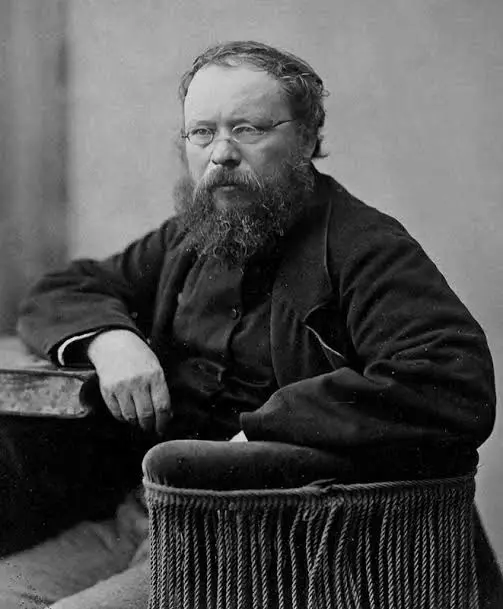
In September 1864 the International Workingmen’s association was founded in London, and by this point Proudhon was nearing the end of his life and so did not have any part of it. This new International organization aimed to unite the struggle against capitalism across countries, bringing together socialists, communists, anarchists, and other unique ideological trends; all coming together in an attempt to create a united, organized political force that could challenge the rule of capitalism and oppression of the state. Proudhon died a few months after its founding, but supporters of his theory, known as the French mutualists, were active in the organization and initially had some influence in it. They argued against labor strikes and of the idea of collectivizing land, against the concept that land could be legally granted to any body, even a collective one. For three years Marx argued against them in debates in the organization and eventually they became less popular and influential within it; but the ideas of Proudhon, and this new concept/identity of anarchism itself, inspired many others who adapted it from their own insights and perspective.
Anarcho-Socialism
One of these people inspired by Proudhon and seemingly taking up the mantle of the movement was Mikhail Bakunin. You see, the thing about Proudhon’s ideological conception of anarchism (mutualism) was that it preached against violent revolution, advising that a violent uprising would just lead to more authoritarian rulers. So to Proudhon and his followers, the strategy for achieving socialism was to create this decentralized “gift economy” alongside the capitalist one; not violently clashing with it, but developing alongside it and eventually replacing it when it proves to be a better system and renders capitalism obsolete. While this was an inspiring idea for many, Marx pointed out the inherent violence and force by which capitalism (and class society itself) operates, and this made many people lose faith in the concept of mutualism. But then comes along Bakunin, and other like-minded anarchists, and they accept that insight Marx had, but still disagree on Marx’s conclusions. Arguing against the Marxist concept of the “dictatorship of the proletariat” (the idea that the working class needs to seize control of the state apparatus and industries and democratically run them collectively), Bakunin advocated for a violent uprising by the workers and peasants united, to abolish not only capitalism, but the state itself. Bakunin argued that Marx’s concept of the dictatorship of the proletariat would just create a new ruling class, believing that any position of legal power creates oppression and is not negotiable in the struggle for a truly equitable world. He famously took an active role in the Dresden uprising in Germany (in the 1840s) and spent many years in prison for it before basically traveling all the way back around the world from Russia, through America, back to Europe. You could say Bakunin had an adventurous life but this “adventurism” is exactly what Marx criticized. Marx argued that engaging in violent clashes with the capitalist government before the masses were ready and united was a waste of time and energy, and that that time and energy should be put into educating the workers, raising their “class consciousness” so that they will understand their historical position and actually be ready to unite against their oppressors.
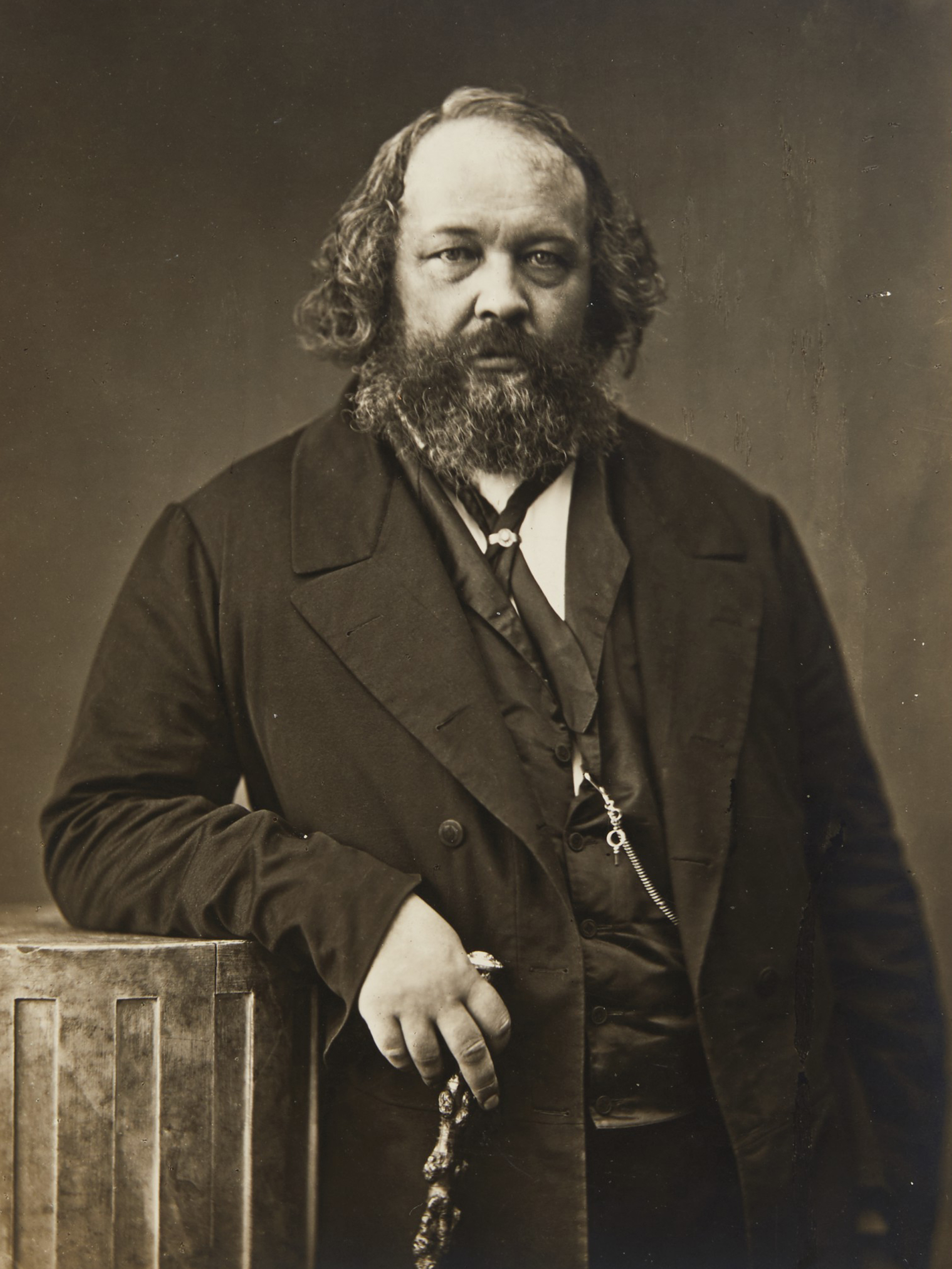
This disagreement on strategy was so serious and important to these men that it became an ideological battle resulting in the eventual dissolution of the IWA. Bakunin, who saw the immediate, violent overthrow of the capitalist state as the most important task, created a revolutionary organization with this aim called the “International Alliance of Socialist Democracy” (IASD) in 1868. He then requested that the IWA allow this organization to be a part of the IWA as its own distinct international branch. Since the IWA already was an internationalist organization, the Marxist leadership of the organization declined this request; however Bakunin and his comrades were allowed in the IWA after Bakunin claimed to have dissolved the IASD and agreed to have his group join as local chapters.
Now here is where it gets really interesting. Over the next few years, Marx, Engels, and other members of the IWA collected evidence (by intercepting letters gathering testimonies, and acquiring internal documents from organizations associated with Bakunin) showing that Bakunin and his supporters had not dissolved the IASD but instead were operating in the shadows with their own separate agenda. In private letters and internal documents, Bakunin and his supporters discussed and carried out their political strategy of basically, ‘operating in the shadows.’ Fearing that after the overthrow of the capitalist state Marxists would attempt to set up a new government, they decided that they needed a secret brotherhood of highly committed anarchist revolutionaries to guarantee any attempt to construct a new state would be struggled against by an organized collective force of power. The members of this secret brotherhood would hold no titles, or position in government, or pass any laws or decrees; only operate from within the working class, to be a part of, and lead uprisings against any form of state or institutional power.
Some historians argue that Bakunin’s secret group was not a serious threat to the IWA, but Marx took it very seriously. After years of gathering evidence, in the 1872 Congress of the organization (which some say was set up locationally to hinder Bakunin and his supporters), Marx shared it with the organization and successfully convinced the group to kick Bakunin and his supporters out of the organization (with Bakunin and most of his supporters not being present). He then had the location of the Congress meetings changed again to be in New York; since this was an international organization created and based in Europe, this move effectively killed the organization, and what is known as the “First International” by communists was ended.
Bakunin and Marx both kept expanding upon and advocating for their ideas, inspiring others until their deaths in 1876 and 1883, respectively. For these next two decades after the split of the First International, the debate over the methods of Anarchism or Marxism to achieve socialism continued to be debated, but without the unified platform and camaraderie that the IWA brought. During this time, a Russian prince would become disillusioned with the system he benefited from, renounce his title, and become one of the most famous ideological opponents of Marxist theory from an anarchist perspective, creating the ideology he described as “Anarcho-Communism.”
Anarcho-Communism and the Second International
Peter Kropotkin was indeed a wealthy prince and was stationed in Siberia as a military officer in his early adult years. His passion (and career in) for evolutionary biology led him to observe the inherent property of cooperation that many animal species seem to have, and its beneficial effects. This was very relevant for his time period because the idea of “social darwinism” was a hot new idea, which basically tried to distort the process of natural selection in Darwinian evolution to justify class society, and having a “ruling” class. His observations led him to advocate against this idea, and even further, to renounce his title and spend the rest of his life dedicated to the liberation of the working class.
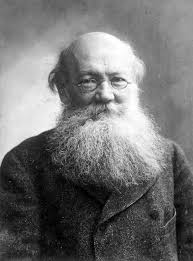
While the Marxists of Europe came together and organized a new “Second International,” bringing over 20 socialist organizations from different European countries together in 1889, Kropotkin was busy writing out his ideas, eventually releasing them in his highly influential book, “The Conquest of Bread” in 1892. In the book, he argued that all wealth is a collective product of humanity, and so it is impossible to tally up who gets what based on any “merit,” rather everything that can be used in a society is freely shared and distributed based on need. His concept of Anarcho-Communism asserted that this must be done by dismantling any form of state power and immediately setting up this alternative, horizontal system in its place.
The Marxists in this new Second International were busy debating electoral strategy in 1893, when anarchists (presumably invigorated by Kropotkin’s uncompromising anti-state philosophy) began showing up to the meetings, fundamentally disagreeing with the tactics being debated. This took time away from the work that these Marxists felt was more important than continued ideological arguments with anarchists, and so in 1896, a new policy was passed by the Marxist leadership that to be a member organization, you had to engage in “political action,” which was defined as running candidates and participating in state elections. Since the anarchists fundamentally disagreed with the concept of using state power in any sense, their ideology was effectively banned from this “Second International.”
The high-stakes friction between anarchists and Marxists that seemed to define the socialist movement throughout the 1800s died down after this final split, but that only, again, gave each side more time to develop their theories. Kropotkin would go on to publish his most famous work, “Mutual Aid: A Factor of Evolution,” in 1902. It gave more hard biological evidence that cooperation, not competition, is the primary driver of species survival and higher evolution in both humans and many animal species. This work gave the anarchist movement a scientific proof that validated their ideological struggle, and also all of those who feel in their hearts that we are meant to work together, for our collective benefit. From the point of view of materialist psychology, his work is infinitely valuable in validating the fact that capitalism’s forced scarcity and competition is against our own evolved wiring, putting us in neural states meant for outside threats not members of our own species. The scientific validation of collective structures provided a powerful ideological closure to Kropotkin’s era. It also directly inspired the movement’s immediate strategic shift toward Anarcho-Syndicalism, even planting the philosophical seeds that would eventually grow into Eco-Anarchism.
Anarcho-Syndicalism
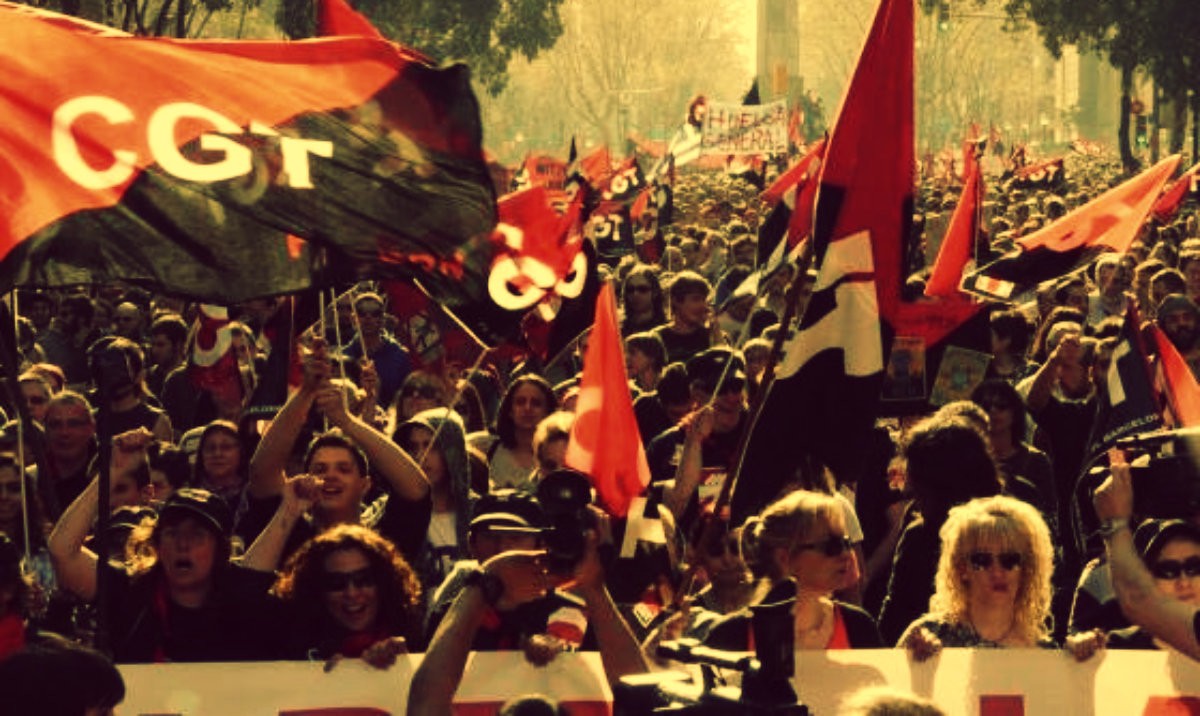
After this, the anarchist movement collectively had a shared sense that Marxism and its strategies did not align with anarchism, and that trying to work with Marxists was not an effective strategy. Kropotkin, his followers, and many other anarchists believed that the anarchist movement needed to focus on building strong labor unions with horizontal power structures. They theorized that forming these revolutionary workers’ unions as a form of “direct action” and ditching the Marxist structure of international political groups and parties was a more practical, direct way to make real change. They believed that if this idea spread and more and more workers organized labor unions this way, all the unions could unite to dismantle capitalist rule and replace it with these horizontal structures that would already be set up through the process. This was expanded upon and attempted in many different places around the world and became known as “Anarcho-Syndicalism.”
Eco-Anarchism

With the climate crisis becoming more apparent in the middle to late twentieth century, the direct focus on saving our habitable planetary environment has become a necessary focus for many people, including anarchists. While traditional Anarcho-Syndicalism focused on uniting the working class for a new kind of horizontal power to distribute goods collectively, Eco-Anarchism (or Social Ecology) expands this material analysis to include the natural environment itself. The core argument of Eco-Anarchism is that the hierarchical domination of humans over other humans is the exact mechanism that leads to the capitalist domination and extraction of nature. Therefore, you cannot solve environmental destruction without completely dismantling the coercive state and class society. Through the lens of Affective Socialization Theory, all of these anarchist currents can be understood as attempts to build Collective Agency Expectancy through immediate, horizontal structures. They explicitly reject the high Hegemonic Volatility they believe a transitional state would inherently create, seeking instead to lower Material Strain directly through localized, community-controlled resources.
Sources and Further Reading
- 1. Anarchist Library: An Anarchist FAQ
- 2. Marxists Internet Archive, Proudhon: What is Property?
- 3. Marxists Internet Archive, Bakunin: Selected Works
- 4. Marxists Internet Archive, Kropotkin: The Conquest of Bread
- 5. Marxists Internet Archive, Kropotkin: Mutual Aid
- 6. Rudolf Rocker: Anarcho-Syndicalism
- 7. Murray Bookchin: Social Ecology and Communalism