Ideology guide
Marxism-Leninism
Vanguard organization, democratic centralism, and revolutionary state power.
Timeline
-
1902
What Is To Be Done?
Lenin argues for a revolutionary organization capable of coordinating political struggle under repression.
-
1916
Imperialism, the Highest Stage of Capitalism
Lenin analyzes monopoly capital, finance, colonial division, and war, giving Marxist-Leninist movements a framework for anti-imperialist struggle.
-
1917
October Revolution
The Bolshevik Party leads an insurrection and takes state power in Russia.
-
1919
Communist International (Comintern) founded
The Third International is created to unite communist parties worldwide under a revolutionary Marxist line, later becoming a central vehicle for spreading Marxism-Leninism.
-
1921
Communist Party of China founded
The Communist Party of China is established and begins organizing around Marxist-Leninist politics.
-
1921
Mongolian People's Revolutionary Party takes power
The Mongolian People's Revolutionary Party leads the Mongolian Revolution and forms a revolutionary government.
-
1922
USSR founded
The Soviet Union becomes the first long-lasting state governed by a party claiming Marxist-Leninist politics.
-
1930
Communist Party of Vietnam founded
The Communist Party of Vietnam is established, organizing anti-colonial and socialist struggle in Vietnam.
-
1944
Party of Labour of Albania takes power
Albanian communists emerge from the anti-fascist liberation struggle and establish state power; they lose it in 1991.
-
1945
Vietnamese August Revolution
The Viet Minh, led by the Communist Party of Vietnam, wins state power in northern Vietnam and proclaims the Democratic Republic of Vietnam.
-
1945
Workers' Party of Korea founded
The party that becomes the Workers' Party of Korea is established in northern Korea.
-
1945
League of Communists of Yugoslavia takes power
Yugoslav Partisans led by the Communist Party win state power; socialist Yugoslavia dissolves in the early 1990s.
-
1948
DPRK founded
The Workers' Party of Korea becomes the leading party of the Democratic People's Republic of Korea, also called North Korea.
-
1949
Chinese Revolution
The Communist Party of China wins state power and proclaims the People's Republic of China.
-
1949
Socialist Unity Party leads East Germany
The Socialist Unity Party becomes the ruling party of the German Democratic Republic; the state ends in 1990.
-
1955
Lao People's Revolutionary Party founded
The Lao People's Revolutionary Party is established to lead Marxist-Leninist organizing in Laos.
-
1959
Cuban Revolution
The July 26 Movement wins state power in Cuba, creating the revolutionary government that later consolidates into the Communist Party of Cuba.
-
1965
Communist Party of Cuba founded
Cuba's revolutionary organizations consolidate into the Communist Party of Cuba.
-
1967
South Yemen revolution
The National Liberation Front takes power in South Yemen; its socialist state later unifies with North Yemen in 1990.
-
1975
Laotian Revolution
The Lao People's Revolutionary Party takes state power and proclaims the Lao People's Democratic Republic.
-
1975
Vietnamese reunification victory
The Communist Party of Vietnam defeats the Republic of Vietnam government and extends revolutionary state power across the country.
-
1975
MPLA and FRELIMO take state power
Marxist-Leninist liberation movements take power in Angola and Mozambique; both later move away from Marxism-Leninism.
-
1978
Saur Revolution
The People's Democratic Party of Afghanistan takes state power; its government falls in 1992.
-
1979
Grenadian Revolution
The New Jewel Movement takes power in Grenada; the revolutionary government ends in 1983.
-
1990
Several socialist states end or change course
East Germany, South Yemen, and socialist Mongolia end or transition away from Marxist-Leninist single-party rule.
-
1991
Soviet Union ends
The USSR dissolves, ending the original Marxist-Leninist state project that began with the Bolshevik Revolution.
Lenin’s Key Contributions and the Bolshevik Split
As I stated previously, Marx’s ideas gradually became, in the eyes of many people, synonymous with socialism itself. The words “Marxism,” “socialism,” and “communism” also started to be used interchangeably in some of the public discourse on the subject. There were some other perspectives, like anarchism, which will be explained later on; for now, we will discuss Marxism-Leninism. Named after the socialist thinker, writer, organizer Vladimir Lenin and his further development of Marxist theory, Marxism-Leninism gradually became the self-described ideology of the USSR (a.k.a. the Soviet Union) and many more self-described socialist states that came after.
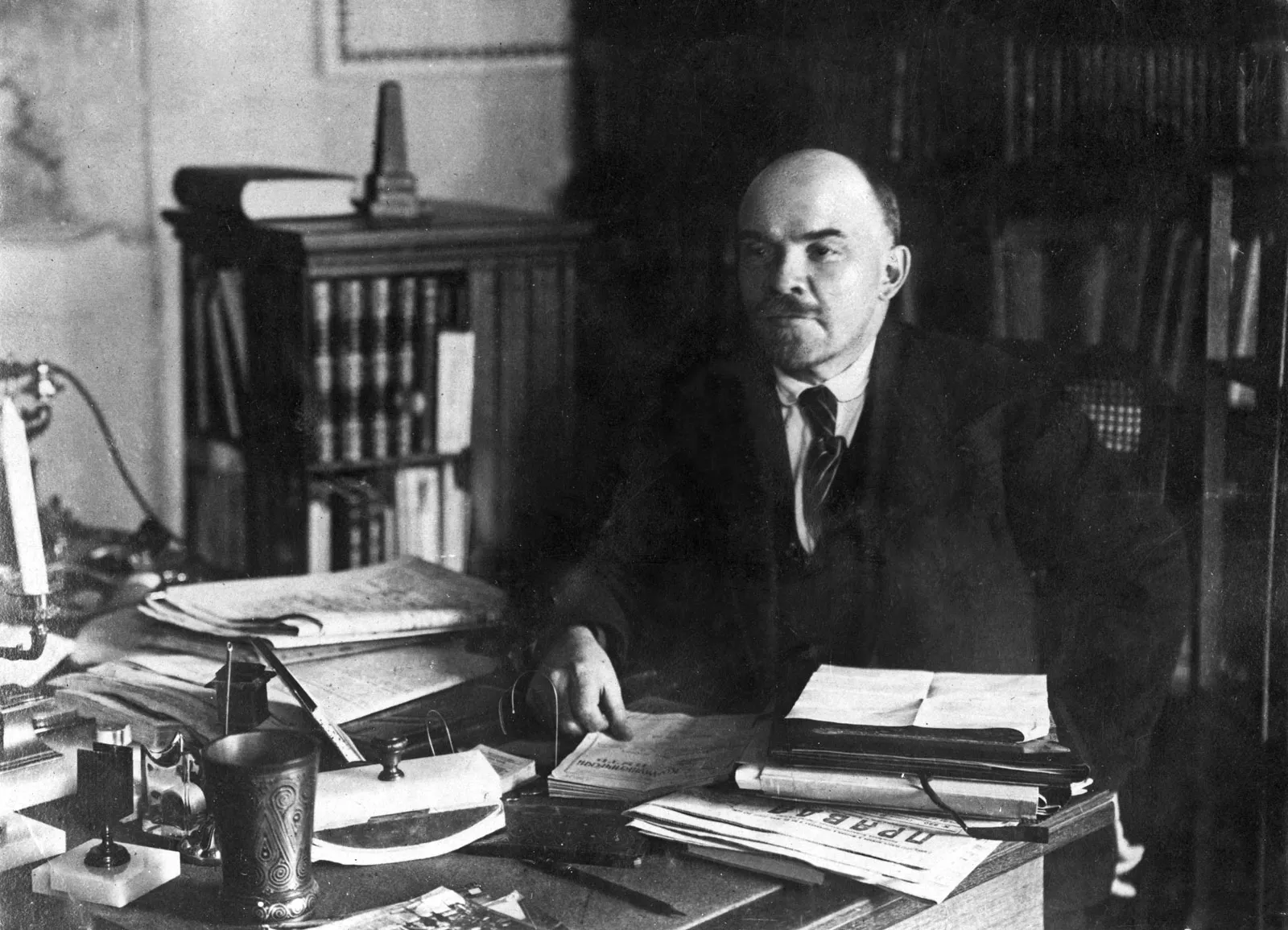
Some of Lenin’s key contributions to Marxist theory were the idea of the vanguard party and Democratic Centralism. Both of these ideas distinguished the Bolshevik Party from other Marxist and socialist parties and movements at the time. The Vanguard Party was a concept that there should be a political party made up of trained (in socialist theory and practice) professional revolutionaries, and that this party would be a vanguard to the working class’s struggle for liberation. A vanguard in battle formation is a small group at the front of the army that leads the rest of the army into battle. Democratic Centralism was the concept that within the political party, all decisions made by the vote of the Congress would be binding on all members; even if a member personally disagrees with the policy, they are expected to follow it, and if they don’t, they could risk losing status or membership. These two concepts were seen as ways to overcome the stagnation and reformism that were observed in other European socialist parties (in other countries) at the time. The Bolshevik Party was originally a faction of the RSDLP (the Russian Social Democratic Labour Party), but a split in the group occurred over key disagreements the other members (called the Mensheviks) had with key concepts of Lenin’s theory, which was written on pamphlets and passed out in cities and read among party members who debated the ideas.
Tactics, the Duma, and the Dictatorship of the Proletariat
All of the disagreements were on tactics; both parties had the same goals, that of a socialist society that ended oppression of the working class. How that transformation of society was achieved was not just a matter of opinion to these people debating in these political parties; it was a matter of life and death. Seriously. It may seem so abstract to us to think about different ideological perspectives of the issue and wonder why it matters, but at this time, revolutionaries who advocated for the end of the Tsardom (an autocratic monarchical system where the Tsar and his family have absolute, unquestionable political power) were being sent to prison deep in the Siberian wilderness, or even killed.
It was not just their own lives on the line; the lives of all the people who were suffering under the oppressive tsarist regime were on the line as well. Many preventable deaths from war and other disconnected, incompetent, and greedy governmental policies. These people’s future, their children’s future, were all on the line. These disagreements in policy were ones that would make or break the revolution in the eyes of these opposing sides.
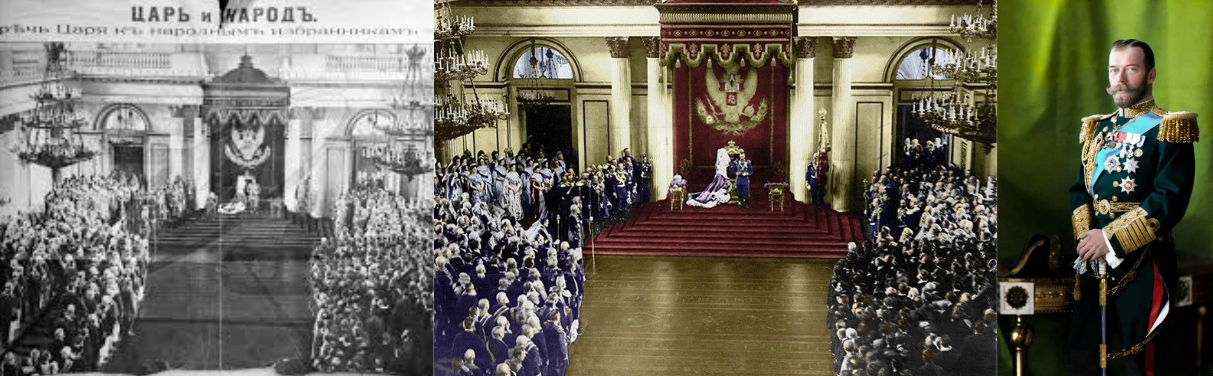
One of the first disagreements, which caused an initial split of the party into factions (before the group fully split), was on the matter of the Duma, which was basically the newly created legislative congress of Russia. The thing about the Duma, though, was that the Tsar still retained the right to veto any law that was made by this legislative congress. So instead of it truly being a governing body with power to allow democratic processes to make laws, this Duma could be seen as more of a democratically run suggestion box that the Tsar could entertain if he wanted to. The members of the RSDLP who became known as the Mensheviks came to the conclusion that, although it was not a true legislative congress, reform might still be possible through this process, and eventually, maybe, the Tsar would give up the control he had, and it would transition into a real congress.
The party members who became known as the Bolsheviks agreed that this was ineffective and would only hold the movement back. Lenin and others in the party argued that the party should boycott the Duma elections and work on creating its own organizations, even underground illegal ones (because certain political parties and views were illegal at the time), because the power is in the workers; all they need to do is be organized and led by the vanguard party, which, with their socialist theoretical and practical training, would lead the working class to overthrow capitalism and create a new state based on the dictatorship of the proletariat (a Marxist concept of the working class, the proletariat, dictating society, instead of the capitalist class dictating them, called the dictatorship of the bourgeoisie). Later they would go on to have a position of entering candidates in the elections to increase public awareness of their cause and intended policies, showing that it was not about strict dogmatic decisions on what is the “right” strategy, but instead about calculated decisions on what is the right move for the right time.
Theory, Practice, and the Scientific Approach
The Mensheviks also believed that it was not immediately necessary or practical to try to construct the dictatorship of the proletariat upon the overthrow of Tsardom. To them, it was more practical to create a wide base of support which allied with liberal bourgeois (capitalist) parties that wanted to establish a bourgeois democracy (a democratic revolution that does not aim to establish socialism, allowing capitalism to continue to exist and claim the reins of power). By doing this, they believed that they would be more successful, and it makes sense, this policy of socialist parties joining forces with liberal capitalist parties (that also want democracy but wanted capitalism to continue with it) was one that was followed by many other European socialist parties, and it had succeeded in ending some monarchies in some countries, turning a few states in Europe into liberal Democracies. However, as this was achieved, capital dominated and did indeed take the reins of power, and this was the stagnation that Lenin wanted to address with his theories.
This is where we can see why his ideas are labeled “Marxism-Leninism.” The emphasis on the scientific approach that Marx took in his analysis of capitalism and what socialism could be was almost like a tradition that was followed. Lenin looked at what the problems and setbacks of other European socialist movements were and theorized possible solutions to them, and this was not just in this specific case. Lenin’s writings, like Marx’s, heavily emphasize the concept of theory, practice, theory, practice. Empirically observing the material conditions and present class conflict, coming up with a theory of how the oppressed class can be liberated, putting those ideas into action, then seeing what worked and what could be improved on, then reapplying that revised theory to the practice, and so on, and so on. Marx once remarked that “the philosophers have only interpreted the world in various ways, the point, however, is to change it” (Marx, Collected Works 5), and this scientific-method style of approach to social change was something the Bolsheviks took very seriously. In real time they were helping unionize and organize workers for strikes and rebellion, then going back to the pen and paper, describing the movement’s progress and events that had occurred, critically analyzing them, and then offering any suggestions for improvement of methods or highlighting of what worked and why, then continuing that process over and over again, as the movement grows.
The Ideology of the Superstructure
The Mensheviks also did not agree with the concepts of the vanguard party or democratic centralism, and would continue to write and advocate for their ideas, and so eventually were kicked out of the party. The party’s name was now “the Russian Social Democratic Labour Party (Bolshevik),” and this party would end up winning the power struggle after the Tsardom was dissolved in 1917, and would lead the country into its plan to create a socialist state (or country), and soon after changed its name again to become the “CPSU” (Communist Party of the Soviet Union).
This revolution was a very influential moment in history; it inspired similar movements to form all across the world, but what did this new strain of socialist thought mean in terms of state policy? What policies characterize a “Marxist-Leninist” government? The relevance of this question is the fact that since this 1917 revolution, many countries around the world have formed from revolutions led by self-described “Marxist-Leninists.”
To try to understand the policy of a nation without understanding the ideology of the superstructure (the broader society and its institutions) can lead to a confused or entirely incorrect analysis. Without understanding what the intended purpose of the policies passed by governments is (which is revealed in examination of the ideology of the superstructure), we can look at policies and look at their effects, or even assumed effects, and guess what the purpose is, but what will we then say when the same government passes a new policy that contradicts, or even seems antithetical to, the purpose previously assumed? This is why, in political discourse, discussion of the “ideology of a nation” is remarked on. Stigmatizing these labels increases confusion, and so that is why an essay defining socialism requires the length this one does.
In the ideology of Marxism-Leninism, as previously stated, the scientific approach to creating a better society is emphasized, and ideally, practiced, as seriously as the science of any other field, and so the structuring of the state after the 1917 revolution, and the policies passed by the new government, can best be understood in this sense. With this in mind, many contemporary commentators on the subject will also use the term “socialist experiments” to describe these countries.
State Ownership and Workers’ Democracy
Marxist-Leninist socialism is most often characterized by a state-run economy, and this, contrasted to the liberal concept of freedom of individuals to own entire companies and exercise personal control over industries, has often been labeled as evidence of “authoritarianism” or a “dictatorship,” but to the socialists of the USSR, their society was even more free because of this state ownership. The reason being that these state-owned industries were owned by the state for the purpose of enforcing these industries to be democratically run, with the power of the state, which was described by many citizens and outside observers to be a workers’ democracy, a democracy without influence from single individuals with enough wealth to influence the outcomes of the elections.
Pat Sloan, a British economist and academic, lived and worked in the USSR for 6 years (from 1931–1937) and, upon his return to Britain, wrote the book Soviet Democracy, which was an analysis of life in the USSR and the new economic system the country had developed. He concisely bears witness to what I have described, in these two brief quotes from the book, where he says, “The means of production and propaganda are socially owned and controlled, and there is no longer the domination of society by a small class that owns the property,” “To-day the actual experience... has shown how real democracy can be, once the power of private property is finally broken” (Sloan, Soviet Democracy). More detail on the content of the policies and their effects will be provided in a later section, but for now let us move on to the other perspectives of contemporary socialist thought.
Modern movements & current struggles
- International League of Peoples' Struggle An international anti-imperialist alliance of mass organizations and campaigns.
- ANSWER Coalition A U.S.-based anti-war coalition frequently involved in anti-imperialist mobilizations.
- Cuba Solidarity Campaign A UK campaign opposing the U.S. blockade and supporting Cuban sovereignty.
- International People's Assembly A global network coordinating left movements, unions, and parties around anti-imperialist and socialist politics.
- Black Alliance for Peace A U.S.-based anti-war, anti-imperialist, and anti-colonial organization grounded in a Marxist-Leninist analysis.
- Black Lion Party for International Solidarity A Philadelphia-based Black liberation, community mutual aid, and anti-ICE organization led by Chairman Paul Birdsong.
- Friends of Socialist China A platform defending China's socialist path and promoting solidarity with the Chinese revolution.
- Tricontinental: Institute for Social Research A left research institute producing analysis and educational materials from a Marxist-Leninist and anti-imperialist perspective.
Organizations
- Party for Socialism and Liberation United States
- Black Lion Party for International Solidarity United States
- Communist Party of China China
- Lao People's Revolutionary Party Laos
- Communist Party of Vietnam Vietnam
- Workers' Party of Korea DPRK / North Korea
- Communist Party of Cuba Cuba
- Communist Party of India (Marxist) India